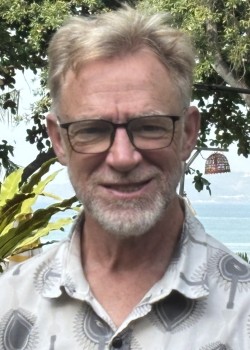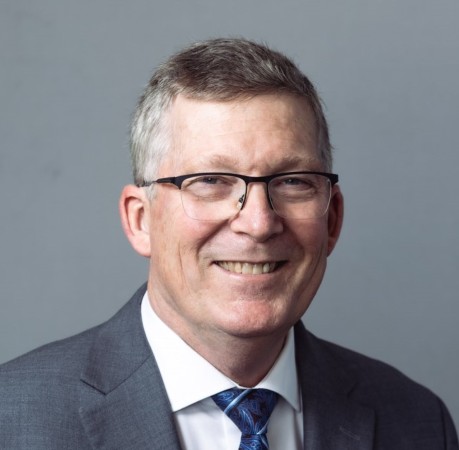
Dr. Brian Rowe’s journey into medicine was shaped by his upbringing in a medical family. His mother was a nurse and his father was a physician. “Growing up, I heard many medical stories and interacted with many people from the medical community,” Dr. Rowe recalls. His father’s career as a committed and impactful clinician-scientist had a lasting influence on him. “I watched my father develop a career, family and reputation in medicine,” he adds. From a young age, Dr. Rowe was exposed to the world of healthcare, which naturally led him to pursue his own path in medicine.
In addition to his family’s influence, Dr. Rowe’s experiences in both a gap year in Australia and during his undergraduate biology degree at Queen’s University sparked his interest in science and research. “That introduced me to the role of science and evidence in healthcare,” he explains. With support and mentorship, including guidance from the coach of the Queen’s University varsity soccer team, Dr. Rowe found his way into medical school. He chose to pursue Family Medicine and later Emergency Medicine, which allowed him to combine his passion for clinical care and research. His experience in Little Current on Manitoulin Island working with Dr. Jack Bailey further solidified his decision.
Dr. Rowe’s decision to practice in Alberta was influenced by both professional opportunities and personal connections. After completing his training in Ottawa, he began his clinical practice in Sudbury, Ontario. However, despite the strong clinical support in Sudbury, access to research collaborators and funding was limited. “I was always interested in evidence-based medicine,” he says. His desire to continue his research led him to Edmonton in 1997, where he accepted a position as Associate Professor and Research Director in the Department of Emergency Medicine at the University of Alberta. “The rest, as they say, is history,” Dr. Rowe reflects. The move to Alberta opened the door to a thriving research environment, with support from Dean Lorne Tyrrell and ample opportunities to collaborate and secure peer-reviewed funding.
Dr. Rowe credits his success to the environment at the University of Alberta, where he was able to compete for and secure continuous research funding, including a Canada Research Chair from CIHR for 17 years. This financial support allowed him to pursue his career as both a clinician and researcher. “I have loved living in Edmonton; it has become home for my family and me,” he says. In return for the opportunities he received, Dr. Rowe has been an active volunteer and coach, giving back to his community in various ways.
While Dr. Rowe’s career has been largely positive, he admits that work-life balance has been one of his biggest challenges. “Clinical practice can be all-encompassing and emergency medicine shift work is demanding, both physically and emotionally,” he explains. Balancing his research career with family life and clinical work was not always easy. He credits his wife, Katharyn Webb, for being the glue that kept their family life balanced. “She helped me stay connected to family and friends and created opportunities for me to be involved in their lives,” he says, highlighting how her support was integral to maintaining his equilibrium.
Reflecting on his residency, Dr. Rowe highlights the importance of mentorship and support from his peers. “I met and continue to engage with colleagues from that period,” he says. “Having supportive friends and family was an important component of my residency success. I had excellent mentors along the way who took the time to teach and encourage me.”
Looking back at his training, Dr. Rowe credits Evidence-Based Medicine (EBM) as a cornerstone of his career. His introduction to EBM came from Dr. Bill Feldman, an academic pediatrician at the Children’s Hospital of Eastern Ontario, who established an evening seminar series on the topic. “It transformed my career,” Dr. Rowe recalls. “It led me to obtain additional research methodology training, particularly in systematic reviews, which were just emerging as a powerful tool to synthesize evidence.” His involvement with the Cochrane Collaboration and later co-leading an Evidence-Based Practice Centre at the University of Alberta further solidified his role as a leader in EBM.
As Dr. Rowe looks to the future of healthcare in Alberta, he acknowledges some of the current challenges, such as vaccine hesitancy and ongoing changes to the healthcare system. “I’m concerned about the re-emergence of measles, which I’ve never seen in my career,” he notes, attributing it to misinformation and anti-science sentiments. “As well, the reorganization of healthcare into four new silos appears risky,” he adds. “International influences are also concerning, since health and disease knows no borders … Canada needs to ensure what happens in the US does not occur here and that we continue to lead the world in producing high-quality research that is trusted by citizens around the globe.”
Despite these challenges, Dr. Rowe remains optimistic about the future. “There is tremendous potential to transform and improve healthcare in Alberta,” he says, pointing to advances in virtual care, artificial intelligence and collaborative care. He is particularly encouraged by the next generation of young, engaged professionals who will address issues such as pandemics and chronic disease management.
Dr. Rowe’s proudest personal accomplishment is his family. He has been married to Katharyn Webb for 34 years and together, they’ve raised two sons, Bradley and Stewart, both of whom have successful careers. “My family has been critically important in creating work-life balance,” he says. Professionally, Dr. Rowe takes pride in his research career and the impact of his work on emergency medicine and clinical research. His leadership roles, including serving as the Scientific Director for the Institute of Circulatory and Respiratory Health at CIHR, have been instrumental in shaping his legacy. He is also proud of his continued involvement in mentoring the next generation of clinician-scientists.
Dr. Rowe’s message to the next generation of physicians is one of encouragement and possibility. “Medicine remains an amazing, constantly changing and exciting career choice,” he says. “The roles available to graduates are extremely broad: clinician, scientist, administrator, advocate, educator and leader. Find your passion and embrace the opportunities presented to you. You will find support, engagement and collaboration all around you.” He also reminds future physicians that they will play a vital role in advancing healthcare and improving outcomes for all Albertans.
In reflecting on his career, Dr. Rowe’s life has been a seamless integration of medicine, research and family. “Life and medicine have become tightly intertwined throughout my career,” he concludes, noting that his personal values and lifestyle choices, such as his love for cycling, have also influenced his medical practice and research, including policy changes around cycling helmet legislation in Ontario and Alberta.