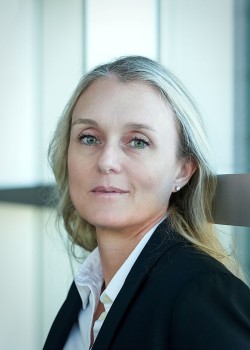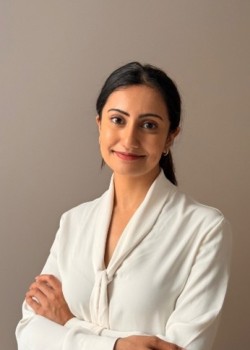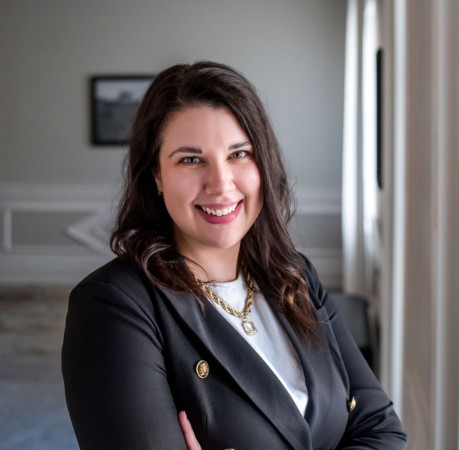
Dr. Pauwlina Cyca’s journey into medicine was deeply personal, shaped by the early experiences of watching her family face immense health challenges.
“My mother and sister were diagnosed with Hodgkin’s Lymphoma when I was eight years old,” Dr. Cyca recalls. “Years went by filled with two-to-three-hour road trips, one way, to the city for their relentless rounds of chemotherapy, radiation and eventually, bone marrow transplants. It meant I was home alone with my little brother, who is on the spectrum and couldn’t walk or talk. It meant my father couldn’t work for over eight years.”
Growing up in a small, rural town with limited medical resources, Dr. Cyca witnessed firsthand the struggles of a community in need of better healthcare. “There were only four physicians for 2500 people over a 50 km radius. Often, the hospital or emergency department was closed due to a lack of coverage,” she explains. “It was then I decided I could help and I would pursue medicine. I wanted to do everything, all of it, so I chose Family Medicine.”
Dr. Cyca’s path to becoming a physician was not easy. As a third-career physician, she faced unique challenges in residency. “One of the biggest challenges was losing agency over my own schedule and the autonomy of my time, especially while balancing time away from my children and upholding financial responsibilities,” she admits. “It was also difficult to forfeit my previous expertise in certain areas of medicine and return to the status of a learner.”
However, she persevered, remaining patient and leveraging every learning opportunity available, particularly in her relationships with fellow healthcare professionals. “I focused on expanding my knowledge of safe and effective medical education, which helped me overcome these challenges.”
Residency also prepared Dr. Cyca for the realities of practicing medicine today. “It taught me patience and how to protect the empathy I brought with me,” she reflects. “It reinforced that resilience is necessary for temporary discomforts, but it’s not a long-term strategy for well-being. That lesson will serve me well as a practicing physician.”
One of the most valuable lessons Dr. Cyca learned in residency was how to teach others. “The greatest impact on my practice has been learning how to teach those who come after me,” she says. “Safe and effective feedback and creating a learning environment tailored to the individual, are essential. It’s important to recognize the learner’s previous experiences and build from there, so we can all learn from each other.”
A defining moment in her residency also shaped how she practices and teaches today. “I once received feedback focused on my personality rather than my skills or ambition to learn. It set me back in months of acquired confidence,” Dr. Cyca shares. “Since then, listening has become the cornerstone of my practice and teaching strategy.”
Dr. Cyca offers the following advice to medical students and residents: “Be authentically you. Seek out mentors who can support your learning and use your voice strategically. Take the next step in your improvement, little by little.”
Reflecting on the future of residency and healthcare in Alberta, she is optimistic. “The future is bright! With improvements in best practices, access to world-class training sites and early mentorship roles, resident physicians are well positioned to continue playing a vital role in healthcare and medical training.”
As for her personal legacy, Dr. Cyca takes pride in the diversity of her practice and her continued dedication to learning. “I’m proud of seeking out continued learning opportunities and the impact of PARA’s leadership in bringing about lasting changes within medical education in Alberta.” she says.
Looking ahead, Dr. Cyca has an empowering message for the next generation of physicians: “You are one person, but one person who can move the earth with the privilege of your position. Use it.”
Her determination is encapsulated in a story from her earlier days: “A dean once told me that making the changes I propose is like ‘peeing in the ocean and expecting to make a difference.’ I replied, ‘You underestimate the potency of my urine.’”
Dr. Cyca’s legacy is built on relationships: “The relationships you make with patients, peers and colleagues will be your steering wheel,” she advises. “Turn to the direction of positivity and get things done.”