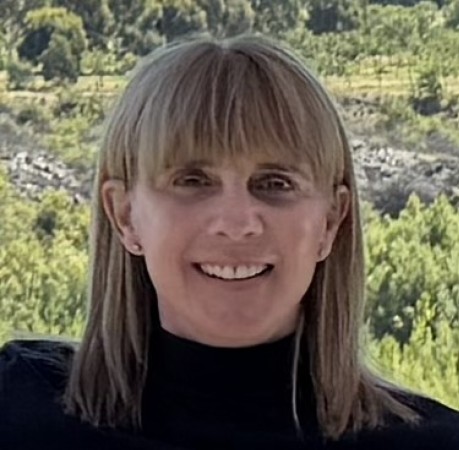
When Dr. Lois Milne started medical school in the mid-1970s, she was one of only a handful of women in a class dominated by men. Opportunities didn’t always come easily. During one surgical rotation, she watched as her male classmates were invited to perform skin-to-skin surgical procedures while she and the other women were asked to hold retractors. Instead of accepting it, she spoke up. “The best way to overcome discrimination is to shatter the silence,” she says. “If something wasn’t right, I talked to the senior residents, the attending physician or if needed the head of the department. With effective communication, I was often able to secure more equitable opportunities for myself and for my female colleagues.”
That instinct - to advocate, to push for fairness, to find better ways - has shaped every stage of her 45-year career in family medicine.
Born in Winnipeg and raised in Calgary, Dr. Milne always knew Alberta would be home. From an early age, she was drawn to medicine for its humanity. “What inspired me most was the opportunity to build trust and form lasting bonds with patients and their families,” she says. “Those relationships can be incredibly gratifying.” She was equally captivated by the intellectual challenge of medicine - the idea that learning never stops and that each new discovery can improve someone’s life.
After earning her medical degree at the University of Alberta, she completed her rotating internship and family practice residency at Calgary’s Holy Cross Hospital, at the time one of the top programs in the country. With no other residents in the hospital, she gained extraordinary hands-on experience.
When it came time to choose a specialty, Dr. Milne was torn between internal medicine and family practice. She loved the intellectual puzzle of complex cases, but what mattered most was the opportunity to know her patients over a lifetime. “Family medicine allowed me to build lasting relationships,” she says.
The breadth of primary care suited her curiosity and the flexibility of the field allowed her to design a career that reflected her values. Family medicine opened doors to community clinics, hospital work, teaching, and leadership, all while keeping patient connection at the centre.
Over the next four decades, Dr. Milne built a career defined by variety and service. She balanced private practice with hospital privileges and low-risk obstetrics while also working in walk-in clinics, community health and university settings. At the University of Calgary, she led the SU Wellness Centre as Medical Director and, for a time, Director, and helped shape campus health programming.
Teaching became one of her greatest joys. As a Clinical Assistant Professor in the Department of Family Medicine, she has mentored countless medical students and residents. Later, she joined a non-profit multidisciplinary clinic that funds global training opportunities for residents to bring new knowledge back to Alberta.
Throughout my 45 years as a physician, I believe that practicing in Alberta has provided me with exceptional opportunities and helped me remain passionate about the practice of medicine.” she says.
Those years also taught her what it means to truly see people. In her early days at the Holy Cross Hospital and her first downtown Calgary clinic, many of her patients faced homelessness and addiction. “Those patients shaped how I practice,” she reflects. “They taught me that there’s no room for judgment in medicine - only compassion, empathy, kindness and respect.”
Her approach remains rooted in that philosophy: listen carefully, advocate fiercely and never lose sight of the human being behind the chart.
Dr. Milne has seen Alberta’s health-care system evolve dramatically. The greatest challenge, she says, has been ensuring patients get timely access to care. “When notified regarding an unacceptable wait time, I would arrange a phone consult with the specialist.” she says. “I try to further stress the reasons for more timely access including concerns with respect to adverse outcomes if access is delayed.”
She also worries about the strain on today’s system, from workforce shortages to funding gaps and believes residents have an important role in shaping what comes next. “Residents must understand how politics and policy affect care,” she says. “They can be instrumental in helping Albertans decide who is responsible for the cost of healthcare, while contributing ideas to new and innovative funding models.”
Throughout her training and career, mentors played a pivotal role. She remembers obstetrician Dr. John Boyd for his humour, warmth and faith in her skills – Dr. Milne was one of the few residents allowed to perform outlet forceps deliveries. “He taught me confidence and compassion,” she says.
She credits other mentors, including Drs. Bob Bailey, Harvey Rabin and Doug Cadger, with sharpening her problem-solving and critical-thinking abilities.
After more than four decades in medicine, Dr. Milne still feels grateful each time she walks into her clinic. “At the end of each day, I know I did my best,” she says. “I hope the next generation of residents can feel the same passion throughout their careers.”
Her message for them is simple but powerful: “Be passionate about your work. Let that passion carry you through challenges. Stay grounded in evidence and compassion. Never compromise your integrity and always give something back to this noble profession.”
For Dr. Milne, medicine has been both a calling and a lifelong classroom - a place to learn, to serve and to keep pushing for better. Her story is a reminder that progress in medicine often starts the same way it did for her: by speaking up, caring deeply and refusing to stand still.