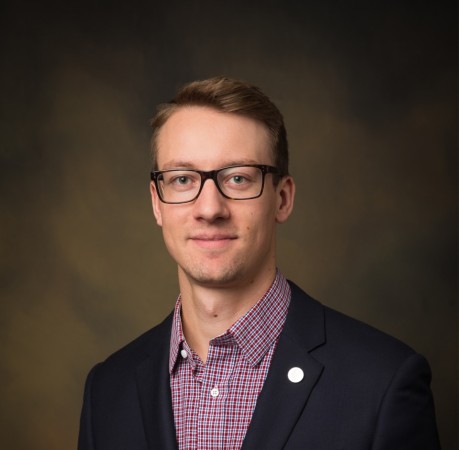
Dr. Michael Martyna was drawn to medicine because it brought together science, service and human connection.
He wanted a career that would challenge him intellectually while allowing him to be present with people during some of the most vulnerable and important moments of their lives. Psychiatry offered exactly that.
“I have always been interested in people’s stories,” he says. “Not just symptoms or diagnoses, but the broader context of someone’s life, relationships, experiences and strengths.”
For Dr. Martyna, psychiatry requires a balance of medical knowledge, careful listening, curiosity and compassion. Over time, his interest deepened into neuropsychiatry, a field that brings together his fascination with the brain, the mind, the body and the ways they shape one another.
“Neuropsychiatry reminds me that the separation between mind and body is often thin,” he says, “and that truly understanding a patient means appreciating both their biology and their lived experience.”
Born and raised in the Edmonton area, Dr. Martyna has always felt a deep connection to Alberta. He loves living in the province and feels a sense of purpose in serving the people who call it home.
What anchored him here even more was the mentorship he received throughout his training. The collegiality, clinical guidance and opportunity to learn from leaders in his field helped shape not only his career, but his own approach to leadership.
“From these experiences, I’ve learned my own leadership style and the importance of mentorship,” he says. “Now, fostering the growth of future physicians is a central part of my career.”
One of the most defining challenges of his career came early in practice, as he completed fellowship and began working as a physician during the COVID-19 pandemic. The shift to virtual platforms, constant uncertainty and the need to support patients through a collective trauma required flexibility and creativity.
He navigated that period by leaning on colleagues, staying adaptable and returning to a simple truth: patient care is ultimately about the person in front of you.
That lesson has carried through his work.
Residency prepared Dr. Martyna clinically, but it also showed him how to navigate the realities of the healthcare system - its strengths, limits and complexities. He learned how to collaborate across the healthcare team and, just as importantly, how to connect with patients, colleagues and himself.
His work with PARA became one of the most valuable parts of that experience.
“My work with PARA taught me administrative and leadership skills that I did not know would be part of my residency journey, but truly completed it.”
Looking back, one of the moments that most shaped his approach to medicine came in the emergency department, where he saw patients in deep distress. In those moments, he learned that while medications and interventions matter, compassion can be one of the most powerful tools a physician has.
“Simply being present and showing genuine care can have a profound impact,” he says.
That understanding has shaped every patient relationship he has had since.
Dr. Martyna sees Alberta’s healthcare system as being in a period of profound change and he recognizes the uncertainty that comes with it. But he also believes physicians have a meaningful role to play in shaping what comes next.
That influence can happen at the policy level, but it also happens every day through patient care.
“As physicians, we can play a role in shaping the system,” he says, “both at a higher level, policy or philosophy level, but also through day-to-day patient care.”
Resident physicians, he believes, are especially well positioned to contribute to that future. They are on the front lines of healthcare, often serving as the first point of contact for patients and seeing the system from a perspective that is both practical and immediate.
He has also seen residents shape broader policy through PARA, including work related to flavoured tobacco regulations and health human resource planning.
“I have experienced many different policy initiatives influenced by residents and PARA,” he says, “that I know have had an impact on the way health policy is shaped in Alberta.”
When asked what he is most proud of, Dr. Martyna points first to his work providing specialty care to marginalized and underserved patients. He has been part of a group of physicians who have
significantly expanded specialized neuropsychiatric care in Edmonton, work he describes as deeply meaningful.
Alongside that clinical work, he is proud of the opportunities he has had to influence the healthcare system through leadership, including serving as PARA President and now as a Program Director.
Those roles have allowed him to bring together two parts of medicine that matter deeply to him: individual patient care and broader system change.
As PARA marks its 50th anniversary, Dr. Martyna’s message to the next generation of physicians is simple.
Make your career your own.
“Practice in a way that’s authentic to who you are,” he says. “There’s no single right way, just strive to be the best physician you can and to provide compassionate care to your patients.”
For resident physicians navigating clinical demands, leadership opportunities and the uncertainty of a changing system, his advice is to embrace the challenges ahead while remembering that medicine can be shaped, in part, by the people practising it.
“You have the power to shape your path.”