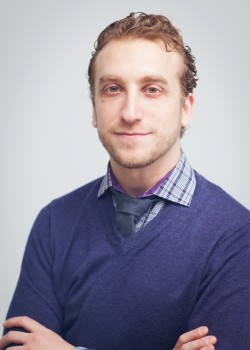
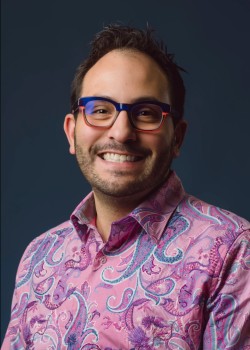
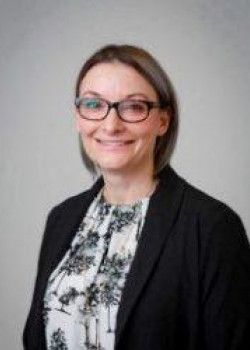
Dr. Louis Francescutti

Dr. Louis Hugo Francescutti’s journey into medicine was shaped by his attraction to the raw intensity of human vulnerability. “Emergency medicine doesn’t allow you to hide - it exposes your limits and your potential,” he says. Over time, Dr. Francescutti came to realize that many of the “emergencies” he encountered could have been prevented with earlier attention to the needs of communities. This realization drove him toward public health and injury prevention, and later, to palliative care. “Medicine gave me a voice; public health gave me purpose,” he reflects. 


Dr. Francescutti’s decision to stay in Alberta for his practice was influenced by both personal and professional factors. “I came for the blue skies and stayed for the people,” he says. “Alberta is a place that rewards bold ideas - as long as you’re willing to work for them. It’s where we built Bridge Healing from scratch, helped ban cellphones while driving and challenged how we care for patients who live in poverty. Alberta didn’t just shape my career - it sharpened it.” he shares. 


One of the greatest challenges Dr. Francescutti has faced throughout his career is indifference. “Systems that resist change. Colleagues who say ‘that’s not our job,’” he says. But for him, challenges are invitations to lead. “I’ve learned that you don’t wait for permission to make a difference - you lead with compassion, data and relentless focus. If you’re not uncomfortable, you’re not growing.” 


Dr. Francescutti credits residency with giving him the skills to survive, but he admits it didn’t always equip him to thrive. “Residency taught me to manage complexity, but rarely addressed the social forces shaping my patients’ lives,” he explains. “That’s where self-directed learning kicked in.” For Dr. Francescutti, residency was just the beginning. “Residency is a launchpad, not a destination. What you choose to do after will define the physician - and person - you become,” he adds.

 
Looking back at his early training, Dr. Francescutti remembers a pivotal moment that changed the way he thought about medicine and patient care. “One night early in my career, I realized we weren’t just treating broken bones - we were treating broken systems,” he recalls. “That moment rewired my thinking. From then on, every patient became a story about upstream failure and every discharge a chance to intervene differently.” For Dr. Francescutti, the ER doors may close behind the patients, but the responsibility doesn’t end there. 


As he looks to the future of healthcare in Alberta, Dr. Francescutti is optimistic yet mindful of the challenges. “The future of healthcare in Alberta is unwritten - and it’s yours to write,” he says. “You will inherit not just a system, but its inequities, its missed opportunities and its potential.” He sees resident physicians as change agents, urging them to lead now. “Resident physicians are not trainees in waiting ... Don’t wait to be asked. Lead now. Advocate fiercely. Think boldly. Innovate with heart,” he urges. 


One of Dr. Francescutti’s proudest accomplishment has been his commitment to speaking up for what’s right.  “Whether it was advocating for safer roads, creating Bridge Healing for our homeless patients, or demanding accountability in leadership roles - I always believed that physicians have a duty to speak up, even when it’s inconvenient. Especially when it’s inconvenient.” 


Mentors have also played a key role in shaping his approach to medicine, in ways that go beyond their qualifications. “My mentors weren’t always the ones with the longest CVs - they were the ones who listened,” he says. “Who walked into chaos with calm. Who weren’t afraid to say ‘I don’t know’ and then figure it out.” Through them, he learned that humility and humanity are not weaknesses in medicine - they are prerequisites. 


His life outside of medicine has also influenced how he practices. “Being a physician has made me grateful - and vigilant. I’ve seen how fragile life is,” he shares. “That’s why I protect my time with family, floss obsessively and try to leave every organization better than I found it. Life outside of medicine reminds me that the best doctors are also fully human.” 
Looking ahead, Dr. Francescutti’s message to the next generation of physicians is clear: “Your stethoscope is a powerful tool - but your voice is even more powerful,” he says. “Use it to advocate for justice, not just diagnoses. Be the physician who listens when others dismiss. Be the one who asks, ‘Why not?’ when others say, ‘We’ve always done it this way.’ Be kind. Be courageous. Be the change Alberta needs - and don’t forget to floss.” 
 

‹ Back to Resident Physician Stories

More Stories

Dr. Michele Foster

Dr. Michele Foster: Compassion, Complexity and the Courage to Stay Human

Dr. Michele Foster’s path to medicine was shaped by equal parts curiosity, compassion and lived experience. She was drawn early to the idea that a career could blend science with human connection, a balance she later found in psychiatry. Eating disorders, in particular, called to her. “It involves both physical and psychological medicine,” she says. “And the opportunity to walk alongside patients and families during some of their most vulnerable moments.”

Read Story ›
Dr. Evan Martow

Dr. Evan Martow: Finding Rhythm in a Career Built on Precision

When the opportunity came to stay in Alberta, Dr. Martow says it felt like the right fit both personally and professionally. “I came to Alberta for Internal Medicine residency because I appreciated the strengths of the program,” he says. “I also found that Alberta’s single provincial health system helped avoid wasteful competition for resources and overcome boundaries that plagued other provinces.” The decision was also personal: his wife’s family is in Edmonton, and when a position opened in the Mazankowski Alberta Heart Institute, “it was easy to say yes.”

Read Story ›
Dr. Adele Duimering

Dr. Adele Duimering: Finding Balance Between Career and Family

Dr. Duimering first discovered radiation oncology through a medical physics research project during her undergrad at the University of Victoria. “It’s a dynamic specialty that offers diverse and meaningful days; time with your patients, continually evolving radiotherapy planning skills and the opportunity to be part of a big team working towards important goals.” 

Read Story ›
Dr. Verna Yiu

From Pediatrician to Provincial Leader: The Lasting Impact of Dr. Verna Yiu

Dr. Yiu’s connection to Alberta runs deep. Her family immigrated to Edmonton from Hong Kong in the late 1960s, sponsored by Dr. Harry Gunning - then a chemistry professor, later the president of the University of Alberta. “We have deep roots with both the city and the university,” she says. “It’s home for us, for our kids and now our grandchildren.” Over the years, she’s come to appreciate how staying in Alberta has shaped both her work and her life. “Being in one place allows you to build trusting relationships over many years,” she says. “It helps to know the system and the people in it - at the university, in the health system and in the community.” 

Read Story ›
Dr. Kimberly Williams

Dr. Kimberly Williams: Leading with Heart and Mind

That decision led her to psychiatry and, later, neuropsychiatry, a field that unites her background in public health with her fascination for the brain. “Psychiatry views patients from a biological, psychological and social lens, recognizing that all these factors are at play in someone’s health,” she says. “It felt like a smooth transition point within medicine for me.”

Read Story ›
Dr. Franco Rizzuti

Dr. Franco Rizzuti: Building a Better System for Patients and Communities

As a child, he was no stranger to the health-care system. From the age of 12 months to 13 years, he underwent 13 sets of bilateral myringotomy tubes and years of speech therapy. At five, he was diagnosed with Legg-Calvé-Perthes disease, which affected his hip. “I received exceptional care and my abilities today are a direct reflection of the comprehensive teams I had,” he says. 

Read Story ›
Dr. Lois Milne

Dr. Lois Milne: A Lifetime of Care, Curiosity and Courage

When it came time to choose a specialty, Dr. Milne was torn between internal medicine and family practice. She loved the intellectual puzzle of complex cases, but what mattered most was the opportunity to know her patients over a lifetime. “Family medicine allowed me to build lasting relationships,” she says.

Read Story ›
Dr. Erica Dance

Dr. Erica Dance: Flexibility, Compassion and Supporting the Next Generation

Emergency medicine wasn’t on her radar when she entered medical school. “I didn’t really like the sight of blood when I was younger,” she laughs. But after her first night on call in trauma surgery, she was hooked. The energy of the emergency department - the pace, the variety, the problem-solving - felt like home.

Read Story ›
Dr. Todd Anderson

Dr. Todd Anderson: A Career Built on Mentorship, Research and Leadership

While in medical school, Dr. Anderson became drawn to cardiology during the first-year block course. His interest deepened after a summer elective in Calgary and a clerkship elective in Baltimore, which confirmed his decision to pursue internal medicine followed by a career in cardiology.

Read Story ›