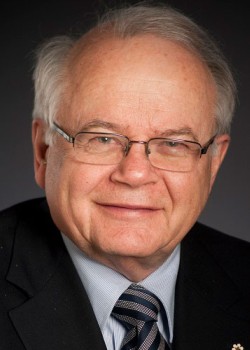
For Dr. Evan Martow, medicine was the natural extension of his early curiosity about science, but his true passion emerged when he realized that helping patients directly was far more rewarding than research alone. “I was drawn more to applying scientific knowledge practically to help people rather than the pursuit of bench research,” he says.
It took time for Dr. Martow to find his niche. Through medical school, residency and fellowship, he explored several fields before discovering Cardiac Electrophysiology and Arrhythmia. “I will admit I did not have a full appreciation for the field until I was well into training,” he says. What he found was the perfect blend of challenge and creativity - a discipline that relies equally on technical precision and analytical problem-solving. “This subspecialty provides opportunities to apply manual dexterity through procedures like device implants and ablations, while also puzzling out arrhythmia intricacies,” he explains. “It’s a wonderful mix that keeps me stimulated.”
When the opportunity came to stay in Alberta, Dr. Martow says it felt like the right fit both personally and professionally. “I came to Alberta for Internal Medicine residency because I appreciated the strengths of the program,” he says. “I also found that Alberta’s single provincial health system helped avoid wasteful competition for resources and overcome boundaries that plagued other provinces.” The decision was also personal: his wife’s family is in Edmonton, and when a position opened in the Mazankowski Alberta Heart Institute, “it was easy to say yes.”
Since joining the division, Dr. Martow has been surrounded by what he describes as “an energetic group of collaboration-minded physicians.” Many of his colleagues trained at the University of Alberta, creating an environment where innovation and teamwork drive progress.
Balancing that energy with the realities of modern medicine remains one of his biggest challenges. “With a specialized area of expertise and relatively few similarly trained colleagues along with other resource constraints, wait times can be quite long,” he says. The challenge becomes a constant trade-off: “You’re either sacrificing personal time to see more patients, letting waitlists grow, or declining new referrals for patients who have few alternatives.” He credits his colleagues and administrative support teams, and increasingly tools like automation and AI, for helping manage the load and focus more of his time on direct patient care.
Dr. Martow’s approach to both training and practice has been shaped by a simple lesson from one of his mentors: “First, be safe. Then, be good. And only then, be fast.” It’s advice he still shares with learners today. “One can see senior physicians working with apparent ease and forget how long it takes to build that foundation. You have to prioritize safety and quality before directing attention to speed.”
Teaching, in fact, has become one of his proudest achievements. His dedication to resident physician education has earned recognition from both PARA and the University of Alberta Cardiology Residents. “Preparing and delivering clinical teaching can often be otherwise minimally compensated work,” he says, “so to know it’s making an impact is incredibly rewarding.”
Looking ahead, Dr. Martow believes Alberta’s health-care system is at an inflection point. “Health care is undergoing multiple reforms,” he says. “For many years, Alberta benefited from a relative greater availability of family physicians and specialists. Now, those resources are much more constrained.” But he’s optimistic about the next generation’s role in shaping what comes next. “Resident physicians are uniquely positioned to bring fresh perspectives and drive innovation in care delivery,” he says.
His advice to them is both practical and personal: “Fully embrace your role straddling the worlds of clinical service, personal education, and teaching students, colleagues, and patients,” he says. “Make the effort to learn the ‘soft skills’ of communication and empathy for which there are no EPAs – no matter your clinical area, these skills are critical to effective physicianship and will serve you well.”