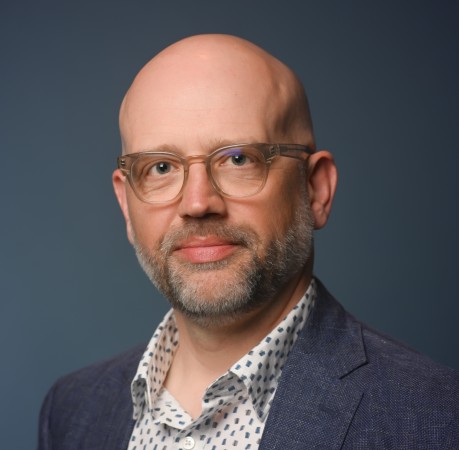
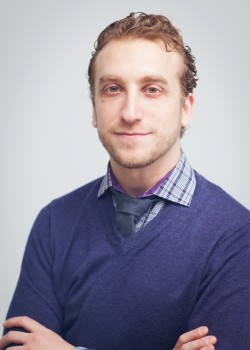
Dr. Brian Wirzba

Medicine wasn’t a foregone conclusion for Dr. Brian Wirzba. He grew up around clinics through his mother, a medical office assistant, but headed into biochemistry thinking medicine was a long shot. “I honestly didn’t think I’d get in,” he says. He did and mentors quickly changed the course of his life. They showed him a way to blend science with care across every phase of adult life, while teaching, leading in the system, managing inpatient and outpatient work and running a practice with real autonomy. General Internal Medicine fit his temperament. “I get bored doing the same thing for more than four hours in a row,” he admits. “GIM lets me do a bit of everything.”

Alberta was home. Born and raised here, he considered options across Western Canada after training and still chose to stay. “Alberta was the place to be in the 1990s,” he says. He also married a proud Saskatchewanite, but Alberta would anchor his practice.

The hardest part of his career hasn’t been the medicine. It’s been the system that’s supposed to support it. “The biggest challenge is the system responsible for care that often doesn’t support the frontline workers who provide it,” he says. That frustration pushed him toward leadership and advocacy, where he could help fix what wasn’t working.

Residency gave him the full sweep of Internal Medicine. He saw complex consults and everyday cases, services that work well and patients the system leaves behind. “It let me crystallize the kind of practice I wanted,” he says. The lesson that stuck most came from his mentors. They didn’t just manage diagnoses. They saw people. “Patients have families, friends, lives beyond their medical issues. That’s the key to my practice.”

He’s realistic about Alberta’s future. “Healthcare changes every year. Right now there’s uncertainty, but there’s no shortage of opportunity to care for patients or lead in a redesigned system,” he says. The test is simple: keep patient care at the center of reform.

What makes him proud is the mix he set out to build: practicing the kind of care he values, teaching the next generation and shaping local and provincial structures. “Training, practice and system impact” isn’t a slogan to him. It’s the day-to-day.

His advice to resident physicians as PARA marks 50 years is direct. “Learn all you can. Spot the frustrating parts of care and get involved to fix them. Really see your patients as fellow citizens who may be scared of what you’ll say. Treat everyone with compassion, care and comfort.” Mentors helped him hold that line and keep balance. “Medicine is a career, but life is bigger. Find the balance.”

That perspective spills into everything else. “In a divisive world, seeing people as individuals worthy of love, compassion and care makes life easier to navigate,” he says. It’s how he meets patients, teaches learners and walks through a system he’s working to improve.
‹ Back to Resident Physician Stories

More Stories

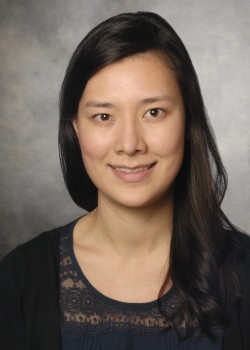
Dr. Michele Foster

Dr. Michele Foster: Compassion, Complexity and the Courage to Stay Human

Dr. Michele Foster’s path to medicine was shaped by equal parts curiosity, compassion and lived experience. She was drawn early to the idea that a career could blend science with human connection, a balance she later found in psychiatry. Eating disorders, in particular, called to her. “It involves both physical and psychological medicine,” she says. “And the opportunity to walk alongside patients and families during some of their most vulnerable moments.”

Read Story ›
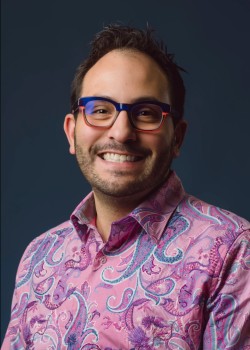
Dr. Evan Martow

Dr. Evan Martow: Finding Rhythm in a Career Built on Precision

When the opportunity came to stay in Alberta, Dr. Martow says it felt like the right fit both personally and professionally. “I came to Alberta for Internal Medicine residency because I appreciated the strengths of the program,” he says. “I also found that Alberta’s single provincial health system helped avoid wasteful competition for resources and overcome boundaries that plagued other provinces.” The decision was also personal: his wife’s family is in Edmonton, and when a position opened in the Mazankowski Alberta Heart Institute, “it was easy to say yes.”

Read Story ›
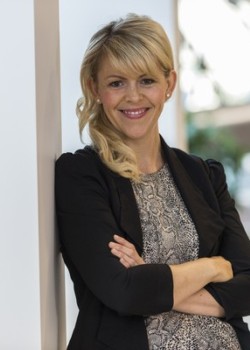
Dr. Adele Duimering

Dr. Adele Duimering: Finding Balance Between Career and Family

Dr. Duimering first discovered radiation oncology through a medical physics research project during her undergrad at the University of Victoria. “It’s a dynamic specialty that offers diverse and meaningful days; time with your patients, continually evolving radiotherapy planning skills and the opportunity to be part of a big team working towards important goals.” 

Read Story ›
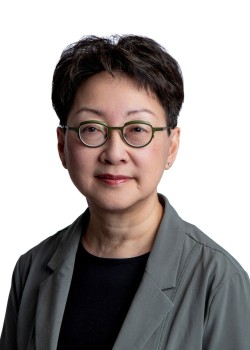
Dr. Verna Yiu

From Pediatrician to Provincial Leader: The Lasting Impact of Dr. Verna Yiu

Dr. Yiu’s connection to Alberta runs deep. Her family immigrated to Edmonton from Hong Kong in the late 1960s, sponsored by Dr. Harry Gunning - then a chemistry professor, later the president of the University of Alberta. “We have deep roots with both the city and the university,” she says. “It’s home for us, for our kids and now our grandchildren.” Over the years, she’s come to appreciate how staying in Alberta has shaped both her work and her life. “Being in one place allows you to build trusting relationships over many years,” she says. “It helps to know the system and the people in it - at the university, in the health system and in the community.” 

Read Story ›
Dr. Kimberly Williams

Dr. Kimberly Williams: Leading with Heart and Mind

That decision led her to psychiatry and, later, neuropsychiatry, a field that unites her background in public health with her fascination for the brain. “Psychiatry views patients from a biological, psychological and social lens, recognizing that all these factors are at play in someone’s health,” she says. “It felt like a smooth transition point within medicine for me.”

Read Story ›
Dr. Franco Rizzuti

Dr. Franco Rizzuti: Building a Better System for Patients and Communities

As a child, he was no stranger to the health-care system. From the age of 12 months to 13 years, he underwent 13 sets of bilateral myringotomy tubes and years of speech therapy. At five, he was diagnosed with Legg-Calvé-Perthes disease, which affected his hip. “I received exceptional care and my abilities today are a direct reflection of the comprehensive teams I had,” he says. 

Read Story ›
Dr. Lois Milne

Dr. Lois Milne: A Lifetime of Care, Curiosity and Courage

When it came time to choose a specialty, Dr. Milne was torn between internal medicine and family practice. She loved the intellectual puzzle of complex cases, but what mattered most was the opportunity to know her patients over a lifetime. “Family medicine allowed me to build lasting relationships,” she says.

Read Story ›
Dr. Erica Dance

Dr. Erica Dance: Flexibility, Compassion and Supporting the Next Generation

Emergency medicine wasn’t on her radar when she entered medical school. “I didn’t really like the sight of blood when I was younger,” she laughs. But after her first night on call in trauma surgery, she was hooked. The energy of the emergency department - the pace, the variety, the problem-solving - felt like home.

Read Story ›
Dr. Todd Anderson

Dr. Todd Anderson: A Career Built on Mentorship, Research and Leadership

While in medical school, Dr. Anderson became drawn to cardiology during the first-year block course. His interest deepened after a summer elective in Calgary and a clerkship elective in Baltimore, which confirmed his decision to pursue internal medicine followed by a career in cardiology.

Read Story ›