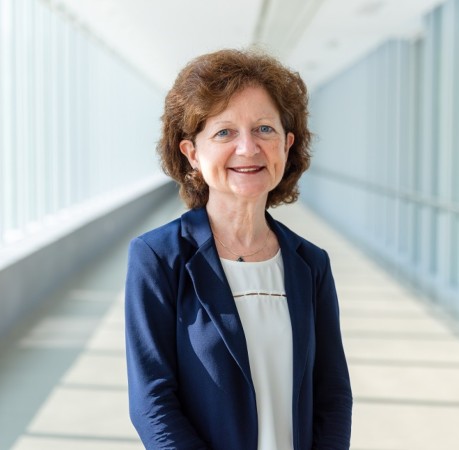
Dr. Brenda Hemmelgarn

Dr. Brenda Hemmelgarn’s journey into healthcare began with a strong foundation in nursing, a path that provided her with early exposure to the critical importance of empathy, compassion and respect in patient care. “I worked in emergency, ICU and at nursing out-post stations in Northern Saskatchewan and on Baffin Island,” she recalls. “Those experiences really showed me how important it is to understand and meet the broad needs of patients, families and communities.”

It was during this time that Dr. Hemmelgarn became involved in research and saw firsthand the value of evidence-based decision-making. Recognizing the significance of this, she pursued further education, completing a Master’s in Nursing at the University of Saskatchewan and a PhD in Epidemiology & Biostatistics at McGill University. After earning her PhD, Dr. Hemmelgarn went on to complete her MD at McMaster University, combining it with her research background to pursue a career as a clinician-scientist.

Her path led her back to Western Canada, where she joined the University of Calgary to complete her residency in internal medicine followed by specialty training in nephrology. “I came on faculty at the Cumming School of Medicine as a clinician-scientist, which allowed me to integrate my clinical practice with my passion for research,” she says.

Dr. Hemmelgarn’s decision to stay in Alberta was rooted in her desire to be closer to her family. “After completing my medical training, I really wanted to return to Western Canada to continue my training and ultimately practice,” she explains. “Alberta has been my home ever since, and I’ve appreciated the numerous opportunities available here that others may not have.”

Throughout her career, Dr. Hemmelgarn has faced the ongoing challenge of balancing a demanding career in medicine with personal life. “One of the biggest challenges has always been finding that balance,” she admits. “Family, friends and colleagues have helped me find that balance.”

Reflecting on her residency, Dr. Hemmelgarn speaks about how foundational it was to her career. “Residency was essential to my development as a physician,” she says. “The support from my fellow residents, program directors, physicians and mentors was invaluable. They provided the advice and guidance I needed at every stage of my career.”

Looking back at her early training and career, Dr. Hemmelgarn identifies the ability to help others as the common thread in shaping her approach to patient care. “The most impactful moments were those where I could help others,” she reflects. “It’s all about serving with empathy and compassion, ensuring that we meet the needs of the communities we serve.”

As she looks to the future of healthcare in Alberta, Dr. Hemmelgarn is committed to ensuring that all Albertans have access to high-quality healthcare. “We all have a role to play in ensuring access to care,” she says. “We need to understand the needs of our communities and be future-focused on how we can meet those needs.”

Dr. Hemmelgarn’s proudest accomplishment to date is her role as Dean of the Faculty of Medicine & Dentistry at the University of Alberta, where she helps shape the future of healthcare in the province. “It’s an honour to be able to help train the next generation of healthcare providers to meet the needs of Albertans and the communities we serve,” she says.

In reflecting on the future of medicine, Dr. Hemmelgarn has an inspiring message for the next generation of physicians: “Being a physician is an honour and privilege,” she says. “Always remember why we’re here: to meet the needs of the communities we serve with compassion, respect, empathy and professionalism. Our social accountability mandate as physicians is to make a meaningful impact on those we care for.”
‹ Back to Most Recent

More Stories

Dr. Christa Aubrey

Dr. Christa Aubrey: Skill, Purpose and Caring for Women

Dr. Christa Aubrey was drawn to work that was both hands-on and meaningful. Raised by a nurse and a carpenter, she grew up valuing practical skills, problem-solving and a sense of responsibility. “I liked to work with my hands and loved to be ‘in control,’” she says. While she never imagined herself in surgery at first, that changed early in medical school. “In first year, I realized I loved the OR because of the technical aspect of it.”

Read Story ›
Dr. Antonia Stang

Dr. Antonia Stang: Curiosity, Leadership, and the Courage to Push Back

As a child, she was cared for by a pediatrician who left a lasting impression. The physician was one of the first female graduates from her medical school - top of her class, intelligent, kind, confident. At the time, Dr. Stang didn’t have the language to describe why that mattered. Looking back, she understands how powerful it was to see a woman excelling in a role she admired.

Read Story ›
Dr. Lorne Tyrrell

Dr. Lorne Tyrrell: A Lifetime of Curiosity, Discovery and Leadership

Beyond the lab, Dr. Tyrrell played a key role in expanding the University of Alberta’s medical and research infrastructure. “We added the Li Ka Shing building, the Katz Pharmacy building, the Mazankowski Heart Institute and obtained the commitment for the Edmonton Clinic Health Academy and the Kaye Edmonton Clinic,” he says. “It was a time of great expansion for clinical and research space.”

Read Story ›
Dr. Tamara Yee

Dr. Tamara Yee: Intense Medicine, Immense Privilege

Being a resident physician is an immense privilege.  

Read Story ›
Dr. Michele Foster

Dr. Michele Foster: Compassion, Complexity and the Courage to Stay Human

Dr. Michele Foster’s path to medicine was shaped by equal parts curiosity, compassion and lived experience. She was drawn early to the idea that a career could blend science with human connection, a balance she later found in psychiatry. Eating disorders, in particular, called to her. “It involves both physical and psychological medicine,” she says. “And the opportunity to walk alongside patients and families during some of their most vulnerable moments.”

Read Story ›
Dr. Evan Martow

Dr. Evan Martow: Finding Rhythm in a Career Built on Precision

When the opportunity came to stay in Alberta, Dr. Martow says it felt like the right fit both personally and professionally. “I came to Alberta for Internal Medicine residency because I appreciated the strengths of the program,” he says. “I also found that Alberta’s single provincial health system helped avoid wasteful competition for resources and overcome boundaries that plagued other provinces.” The decision was also personal: his wife’s family is in Edmonton, and when a position opened in the Mazankowski Alberta Heart Institute, “it was easy to say yes.”

Read Story ›
Dr. Adele Duimering

Dr. Adele Duimering: Finding Balance Between Career and Family

Dr. Duimering first discovered radiation oncology through a medical physics research project during her undergrad at the University of Victoria. “It’s a dynamic specialty that offers diverse and meaningful days; time with your patients, continually evolving radiotherapy planning skills and the opportunity to be part of a big team working towards important goals.” 

Read Story ›
Dr. Verna Yiu

From Pediatrician to Provincial Leader: The Lasting Impact of Dr. Verna Yiu

Dr. Yiu’s connection to Alberta runs deep. Her family immigrated to Edmonton from Hong Kong in the late 1960s, sponsored by Dr. Harry Gunning - then a chemistry professor, later the president of the University of Alberta. “We have deep roots with both the city and the university,” she says. “It’s home for us, for our kids and now our grandchildren.” Over the years, she’s come to appreciate how staying in Alberta has shaped both her work and her life. “Being in one place allows you to build trusting relationships over many years,” she says. “It helps to know the system and the people in it - at the university, in the health system and in the community.” 

Read Story ›
Dr. Kimberly Williams

Dr. Kimberly Williams: Leading with Heart and Mind

That decision led her to psychiatry and, later, neuropsychiatry, a field that unites her background in public health with her fascination for the brain. “Psychiatry views patients from a biological, psychological and social lens, recognizing that all these factors are at play in someone’s health,” she says. “It felt like a smooth transition point within medicine for me.”

Read Story ›