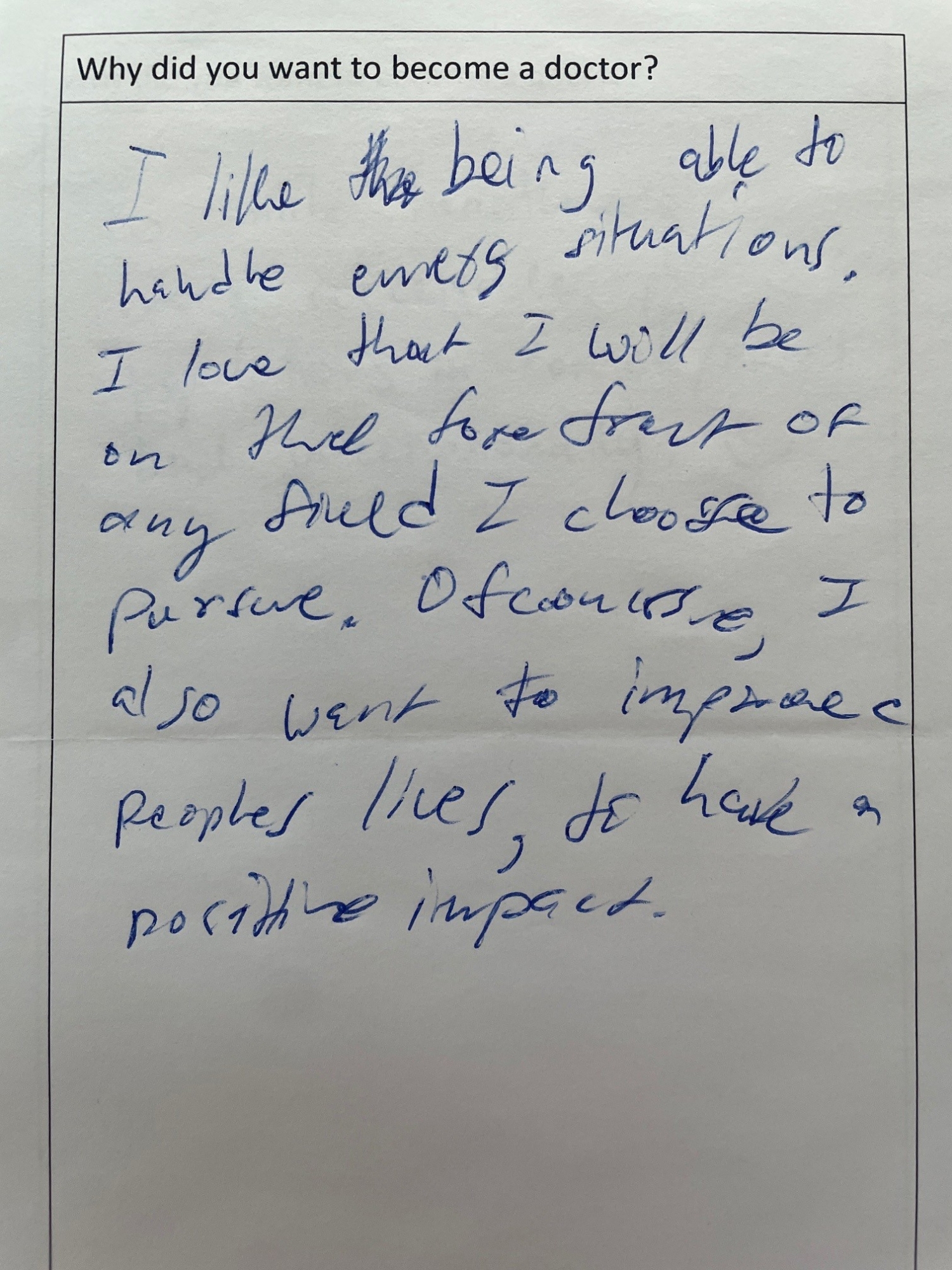
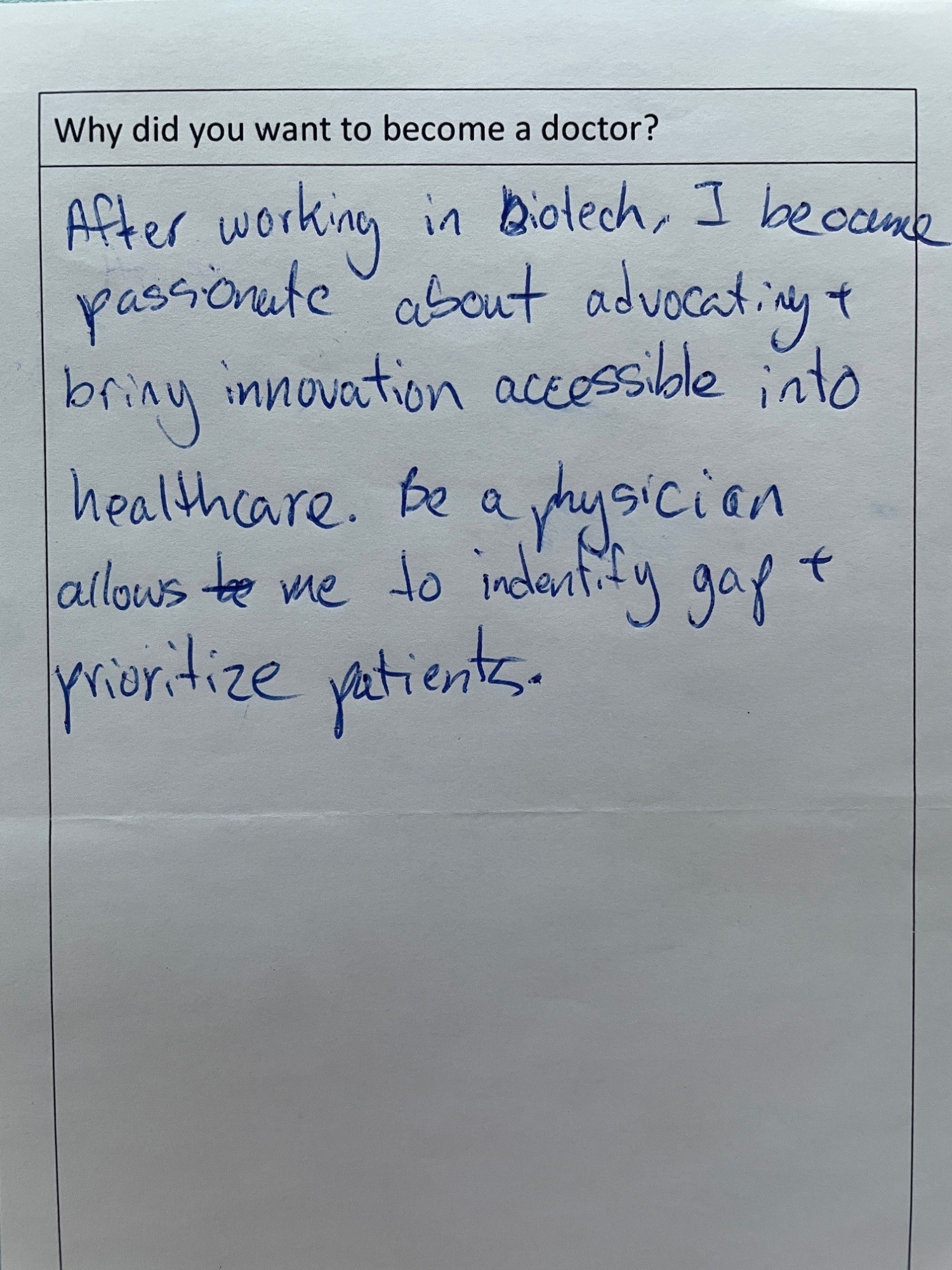
As part of our anniversary year, we asked medical students a simple question: Why did you want to become a doctor?
Their answers revealed something powerful. Behind every future physician is a story shaped by curiosity, lived experience, compassion and a desire to make systems better for the people who rely on them.
For some, the motivation began with personal encounters with health care. One student shared that both positive and negative experiences in the system inspired them to pursue medicine so they could help improve patient care. Another described wanting to reciprocate the care they once received themselves, turning gratitude into purpose.
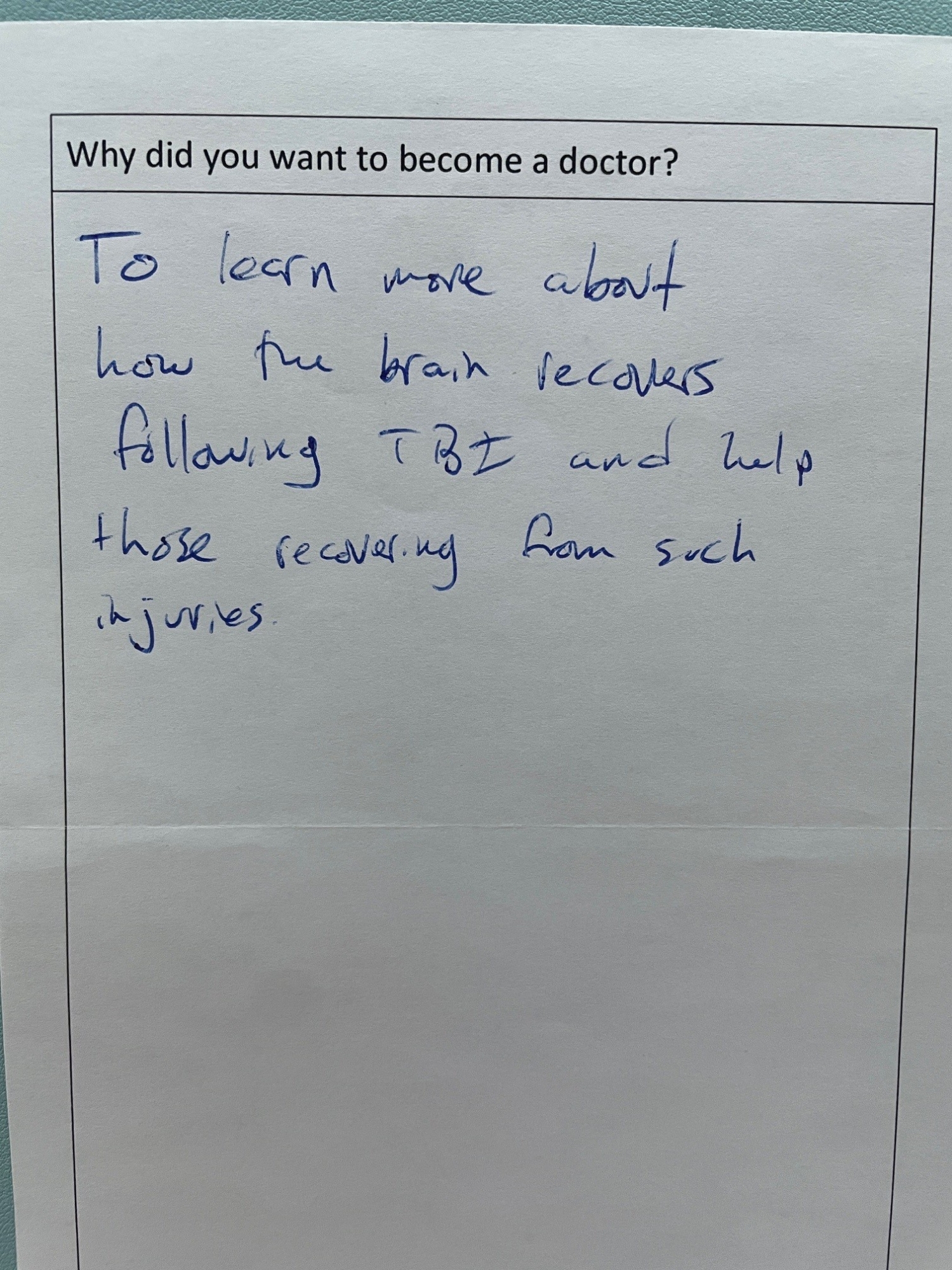
Others spoke about medicine as a natural home for their interests. A love of science, research, discovery and problem solving drew many toward the profession. One student described wanting to combine teaching, helping, science and collaboration in a single career. Another hopes to study how the brain recovers after traumatic brain injury so they can help patients heal from those life-altering events.
For several respondents, advocacy sits at the center of their goals. After working in biotech, one future physician said they became passionate about improving access to innovation in health care and saw medicine as a way to identify gaps and prioritize patients. Others spoke about wanting leadership opportunities, the ability to investigate systemic issues and the chance to improve access to care in rural, remote and international settings.
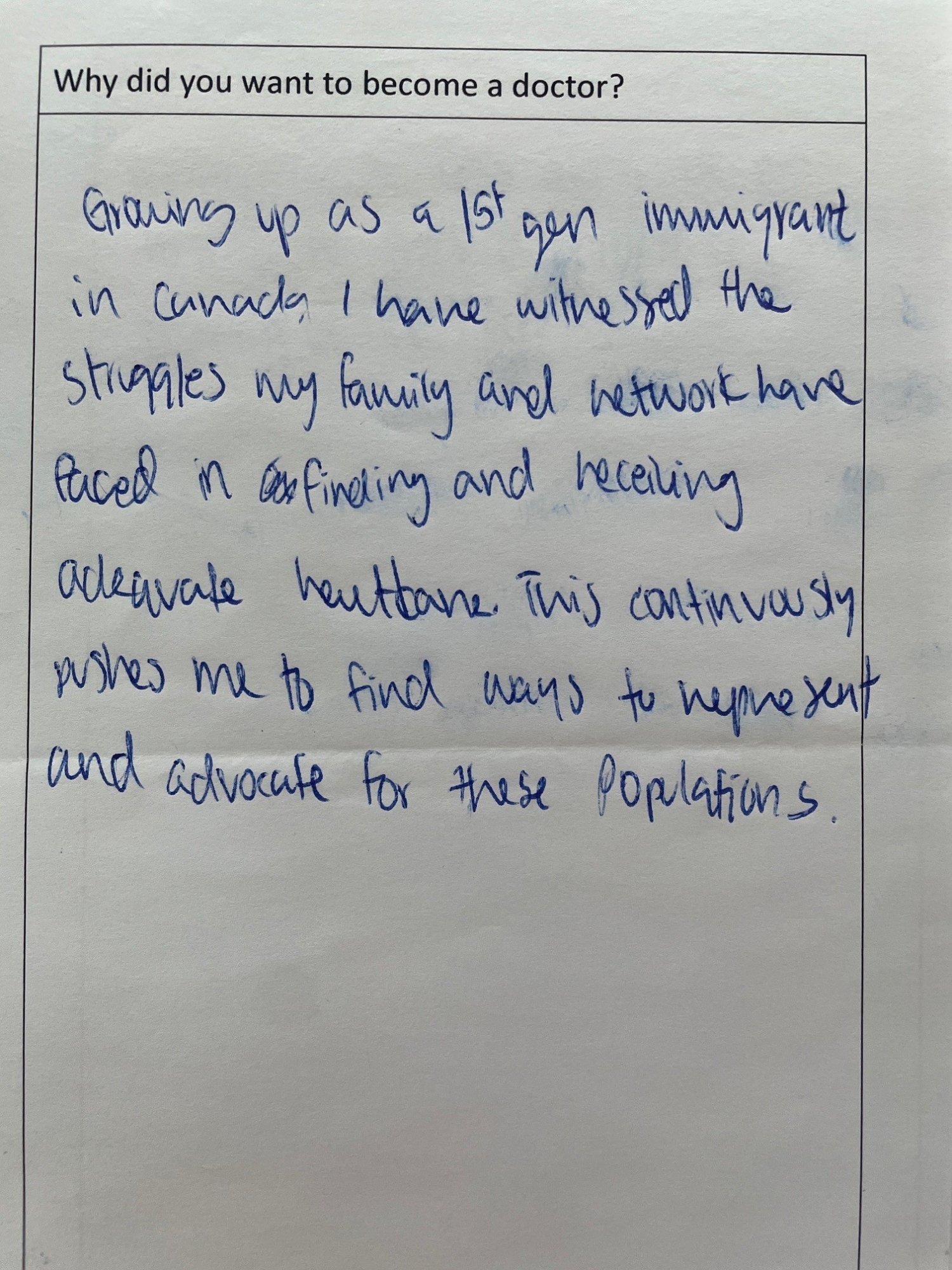
Identity and community also shaped many decisions. Students described growing up in immigrant families and witnessing firsthand the challenges their loved ones faced navigating the health system. Those experiences now drive them to advocate for underserved populations and to help build a more culturally competent profession. One respondent explained that, as a first-generation brown woman, representation in medicine matters deeply to her because she wants patients to see themselves reflected in their physicians.
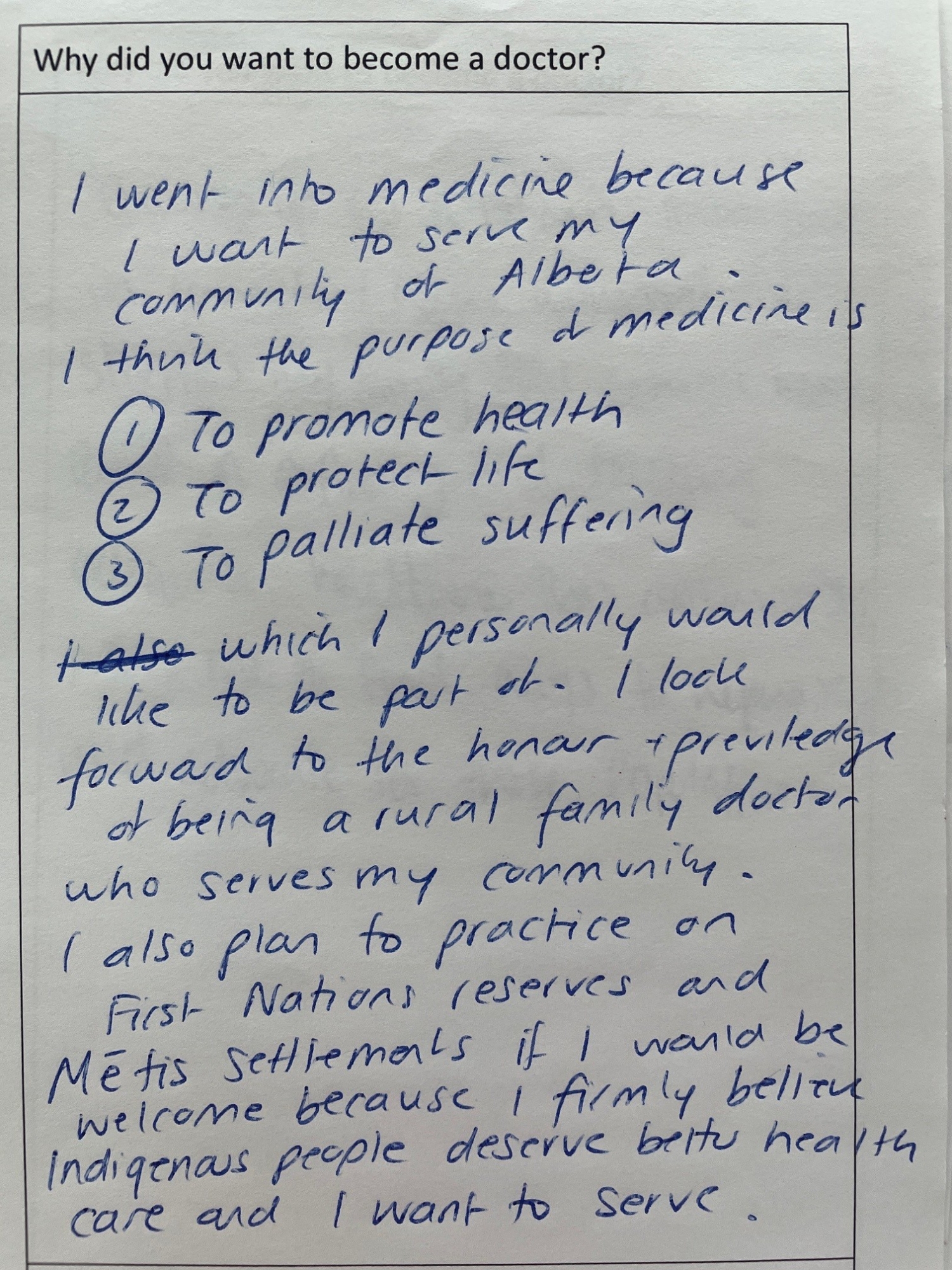
Several students expressed a strong commitment to service in Alberta communities. One hopes to practise as a rural family doctor and, if welcomed, work with First Nations and Métis communities because they believe Indigenous peoples deserve better health care access. Others spoke about wanting to support refugees, become role models for young women or simply be present for patients during vulnerable moments in their lives.
Not all journeys toward medicine begin in the same place. One student is entering medical training after more than a decade as a registered nurse and sees the transition as a way to combine hands-on clinical experience with deeper medical knowledge to improve patient outcomes through a holistic approach. Another described pursuing medicine as a way to expand their autonomy as a health care provider and broaden their ability to serve.
Taken together, the responses reflect a shared sense of purpose. As one student put it, the goal of medicine is to promote health, protect life and relieve suffering. That belief continues to guide a new generation preparing to enter the profession.
These reflections are a reminder that the future of medicine is being shaped not only by knowledge and skill, but by empathy, curiosity and a strong commitment to patients and communities. As these students continue their journeys, their motivations offer a glimpse of the values that will define the physicians of tomorrow.