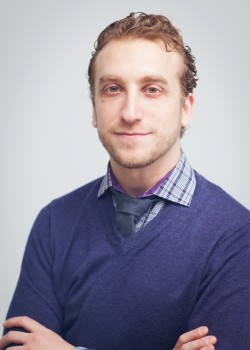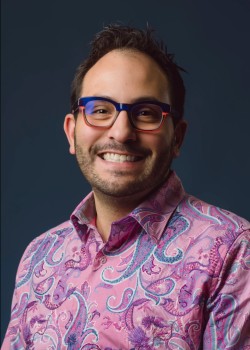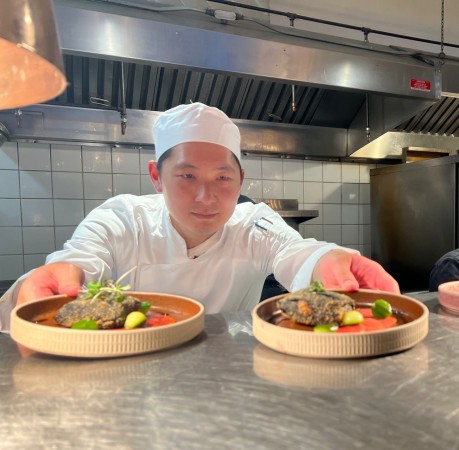
Dr. Chris Koo

Dr. Chris Koo has never been one to settle for doing just one thing. Six years into practice, his career already spans family medicine, teaching, hospital work, procedural care and leadership. Along the way, he has trained in point-of-care ultrasound, intramuscular needling, cognitive behavioural therapy and even culinary medicine. “Family medicine is the perfect fit for me, because I get to do a bit of everything each day,” he says. “It’s flexible enough that I can adjust my career just how I like it.” 


That willingness to carve his own path brought Dr. Koo from Vancouver to Edmonton, despite warnings that he was “moving the wrong way.” But Alberta surprised him. “The people of Edmonton won me over,” he recalls. “They’re down-to-earth and friendly, almost like the energy of a small town in an urban city. With that smallness, I’ve also found so many career opportunities that would be harder to come by in a larger city. I’ve never looked back.” 


Not everything about the journey has been easy. Like many physicians, Dr. Koo struggled with boundaries early in his career. “The hardest part of medicine is knowing where work begins and where work ends,” he says. Years of training had taught him to put duty first and tie his self-worth to performance evaluations. “It’s common to feel enslaved and stifled by the work. But life is so much more than work and we deserve to live just as much as someone else.” 


For Dr. Koo, food became a second passion. He trained in culinary school, appeared on TV and brought those lessons back into medicine. That mix of creativity and practicality now shapes his approach as the University of Alberta’s new Director of Wellness in the Department of Family Medicine. “At a time when our healthcare system is struggling, we need more than ever to think outside the box,” he says. 


His residency years taught him resilience above all else. “Residency was about navigating unfamiliar situations and finding a way to thrive no matter what,” he reflects. That adaptability, honed during training, has carried him through funding cuts, political strife and the disruptions of a global pandemic. 


Mentorship has also been a cornerstone of his growth. He often recalls the words of Dr. Michael Nutting, an “old-school” physician who encouraged trainees to ask themselves one simple question: Is this good medicine? “In our fast-paced, ever-changing world, it’s easy to be swayed by emotions, politics or burnout,” Dr. Koo says. “That guiding principle helps me untangle the noise and focus on what’s best for the patient in front of me. The Hippocratic oath still lives in me.” 
 
Looking to the future, Dr. Koo sees resident physicians as critical agents of change. “We can’t cling to traditions just because we’ve always done it that way,” he says. “Our residents will bring the fresh perspectives we need to shape healthcare into what it must become.” 


As PARA celebrates 50 years, Dr. Koo has a message for the next generation: “You’ve picked a rich and rewarding career. Remember that it’s a marathon, not a sprint. Don’t exhaust yourself and burn out too early. Residency isn’t the end - it’s the beginning. Take the lessons you’ve learned and build the life you want, not the one others tell you to have.” 
‹ Back to Resident Physician Stories

More Stories

Dr. Michele Foster

Dr. Michele Foster: Compassion, Complexity and the Courage to Stay Human

Dr. Michele Foster’s path to medicine was shaped by equal parts curiosity, compassion and lived experience. She was drawn early to the idea that a career could blend science with human connection, a balance she later found in psychiatry. Eating disorders, in particular, called to her. “It involves both physical and psychological medicine,” she says. “And the opportunity to walk alongside patients and families during some of their most vulnerable moments.”

Read Story ›
Dr. Evan Martow

Dr. Evan Martow: Finding Rhythm in a Career Built on Precision

When the opportunity came to stay in Alberta, Dr. Martow says it felt like the right fit both personally and professionally. “I came to Alberta for Internal Medicine residency because I appreciated the strengths of the program,” he says. “I also found that Alberta’s single provincial health system helped avoid wasteful competition for resources and overcome boundaries that plagued other provinces.” The decision was also personal: his wife’s family is in Edmonton, and when a position opened in the Mazankowski Alberta Heart Institute, “it was easy to say yes.”

Read Story ›
Dr. Adele Duimering

Dr. Adele Duimering: Finding Balance Between Career and Family

Dr. Duimering first discovered radiation oncology through a medical physics research project during her undergrad at the University of Victoria. “It’s a dynamic specialty that offers diverse and meaningful days; time with your patients, continually evolving radiotherapy planning skills and the opportunity to be part of a big team working towards important goals.” 

Read Story ›
Dr. Verna Yiu

From Pediatrician to Provincial Leader: The Lasting Impact of Dr. Verna Yiu

Dr. Yiu’s connection to Alberta runs deep. Her family immigrated to Edmonton from Hong Kong in the late 1960s, sponsored by Dr. Harry Gunning - then a chemistry professor, later the president of the University of Alberta. “We have deep roots with both the city and the university,” she says. “It’s home for us, for our kids and now our grandchildren.” Over the years, she’s come to appreciate how staying in Alberta has shaped both her work and her life. “Being in one place allows you to build trusting relationships over many years,” she says. “It helps to know the system and the people in it - at the university, in the health system and in the community.” 

Read Story ›
Dr. Kimberly Williams

Dr. Kimberly Williams: Leading with Heart and Mind

That decision led her to psychiatry and, later, neuropsychiatry, a field that unites her background in public health with her fascination for the brain. “Psychiatry views patients from a biological, psychological and social lens, recognizing that all these factors are at play in someone’s health,” she says. “It felt like a smooth transition point within medicine for me.”

Read Story ›
Dr. Franco Rizzuti

Dr. Franco Rizzuti: Building a Better System for Patients and Communities

As a child, he was no stranger to the health-care system. From the age of 12 months to 13 years, he underwent 13 sets of bilateral myringotomy tubes and years of speech therapy. At five, he was diagnosed with Legg-Calvé-Perthes disease, which affected his hip. “I received exceptional care and my abilities today are a direct reflection of the comprehensive teams I had,” he says. 

Read Story ›
Dr. Lois Milne

Dr. Lois Milne: A Lifetime of Care, Curiosity and Courage

When it came time to choose a specialty, Dr. Milne was torn between internal medicine and family practice. She loved the intellectual puzzle of complex cases, but what mattered most was the opportunity to know her patients over a lifetime. “Family medicine allowed me to build lasting relationships,” she says.

Read Story ›
Dr. Erica Dance

Dr. Erica Dance: Flexibility, Compassion and Supporting the Next Generation

Emergency medicine wasn’t on her radar when she entered medical school. “I didn’t really like the sight of blood when I was younger,” she laughs. But after her first night on call in trauma surgery, she was hooked. The energy of the emergency department - the pace, the variety, the problem-solving - felt like home.

Read Story ›
Dr. Todd Anderson

Dr. Todd Anderson: A Career Built on Mentorship, Research and Leadership

While in medical school, Dr. Anderson became drawn to cardiology during the first-year block course. His interest deepened after a summer elective in Calgary and a clerkship elective in Baltimore, which confirmed his decision to pursue internal medicine followed by a career in cardiology.

Read Story ›