It is incredible to reflect on the past 50 years of PARA and the journey the organization has been on during that time. I’ve had the privilege to serve as an executive for the last five years (10% of PARA’s lifetime!), which I suspect, makes me one of the longest standing executives, ever.
My journey on PARA’s executive started with an application on a whim, on one of the coldest days of February 2021. For those in Calgary, you may remember the long nine days of an oppressive cold snap when the struggle was to reach -25 c as daily high temperature. In short, an email arrived for a vacant position as the VPOF, and I submitted my application.
Once affirmed, I kept signing up year after year of PARA executive commitments. Our previous by-laws didn’t allow for extensions of service (except for Past-President), so I ran for election each year with the assumption that the Assembly (now Advisory Council) would signal their approval or disapproval with my efforts. I’m grateful they decided to keep me.
Two years as VPOF, one year as President then Past-President, and a final victory lap as the Calgary & Southern AB ambassador has been an immense privilege. PARA has never been boring! There were two cycles of negotiations, PARA staff transitions and an office move, two years on CPSA council, many (endless?!) committees and sub-committee meetings followed by texts and messages of laughter and support, that have sustained my wellness and commitment to this organization. I suspect I was the first PARA President to serve during a maternity leave, as well as breastfeed and change diapers during executive board meetings. PARA staff made this possible – you rocked, entertained and held my babies during critical conversations and presentations. Developing relationships with PARA staff and so many residents during the last five years, has strengthened my belief that residents and PARA staff make the organization stronger each year. Thus, our residents are better represented and trained to serve Alberta’s public as physicians for decades to come.
In my clinical world, I’ve found that core leadership skills such a humility, complexity appreciation and authentic partnerships has shaped my approach to patient care and the relationships I’ve developed with families. Unsurprisingly, I’ve pursued a career in neonatal-perinatal medicine, to become a neonatologist, with the focus on providing care to the smallest humans (and often, the smallest critical airways!) in Calgary.
Being a resident physician is an immense privilege.
To be able to know a child from the first seconds to minutes of life, then to provide care for them over hours, days, weeks, and sometimes, even months of their lives is my life’s true calling. I witness incredible transitional physiology the moment the umbilical cord is cut, meet parents and family members at a critical crux of their life’s journey, with the knowledge that I am, as part of an incredible multi-disciplinary team, providing critical and lifesaving medicine.
At the same time, I know that I also can deliver the worst news a parent can hear - your baby is dead. These words, although delivered with the kindest and most compassionate voice, are the hardest moments of families’ lives. I don’t take it lightly that every word I say, even how I approach families, can impact their grief journey for years to come. I’ve learned from some families that grief doesn’t get smaller with time; families somehow develop increased ability to carry its weight while moving forward with the passing of time.
Our grief as clinicians can be important too; thus, as appropriate, I’ve adopted the practice to lead our teams in a moment of silence for the newly departed. This can be an essential part of the physician-patient relationship closure, to say good-bye to a life anticipated, although shortly lived, yet always remembered and cherished. I’m immensely aware that it’s my vocation to be a part of it. Further, I express my gratitude for every clinician for their shared care of our mutual patient. As I reflect, these moments feel more essential to the humanity of medicine than the prescription of any other medication or treatment.
Thus, this letter is my closure in our resident-to-resident relationship, as someone who has been an executive member for five incredible years. Thank-you for the opportunity to be part of your training journey.
Leadership as part of PARA has been an immense privilege; and has shaped the intense medicine I am apart of clinically each day.
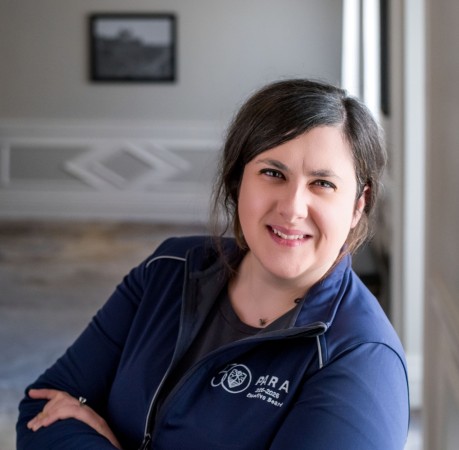
Dr. Tamara Yee
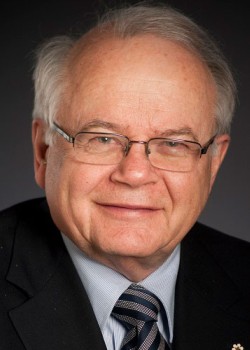
Dr. Lorne Tyrrell: A Lifetime of Curiosity, Discovery and Leadership
Beyond the lab, Dr. Tyrrell played a key role in expanding the University of Alberta’s medical and research infrastructure. “We added the Li Ka Shing building, the Katz Pharmacy building, the Mazankowski Heart Institute and obtained the commitment for the Edmonton Clinic Health Academy and the Kaye Edmonton Clinic,” he says. “It was a time of great expansion for clinical and research space.”
Read Story ›