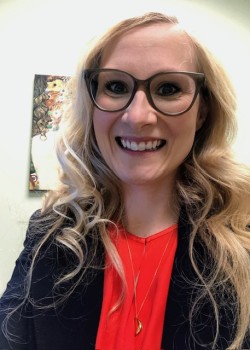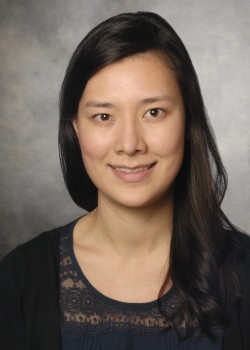
Dr. Michele Foster’s path to medicine was shaped by equal parts curiosity, compassion and lived experience. She was drawn early to the idea that a career could blend science with human connection, a balance she later found in psychiatry. Eating disorders, in particular, called to her. “It involves both physical and psychological medicine,” she says. “And the opportunity to walk alongside patients and families during some of their most vulnerable moments.”
What deepened her pull toward the field was the contrast between what she was learning in training and what she had seen in the fitness world. Teaching spin classes, doing CrossFit and long-distance running exposed her to the pressures and distortions that shape many people’s relationships with food, weight and body image. “I saw the impact on friends, peers and fellow gym-goers,” she says. That personal lens, paired with the complexity of the patients she met, steered her to focus her entire practice on eating disorders.
Alberta has been home for nearly her entire life. After moving from England at age seven, she grew up, studied, served in the military and completed all her medical training in the province. Her family’s ties are deep: her father spent more than 15 years in the Emergency Department at the University of Alberta Hospital and staying in Edmonton felt natural. But it was her work in the Edmonton Eating Disorders Program that solidified her commitment to Alberta. With 12 inpatient beds, 24 day hospital spots and a full clinic and group therapy service, it is one of the most comprehensive programs in the country. “We can transition patients stepwise while keeping the same treatment team,” she says. “It allows for long-term relationships, which matter so much in this field.”
Creating a sustainable life in medicine has been one of her ongoing challenges. “It’s still a work in progress,” she says. She’s learning to protect time for her family, her pets, her Peloton, travel and the things that restore her. She gives herself permission to feel guilt-free about her vacation rule: no work email, no Connect Care. But the boundary-setting hasn’t always come naturally. “Medicine has a way of expanding to fill every available space,” she says. She’s working consciously to change that.
Residency gave her the grounding she needed, clinically, but also emotionally. It taught her how to tolerate uncertainty, make difficult decisions and collaborate on large multidisciplinary teams. Today she works alongside dietitians, psychologists, social work, occupational therapy and nursing in a setting where team dynamics shape the care as much as any single provider. “This profession is humbling,” she says. “Every day.”
The field has also shaped her in quieter, deeper ways. Progress in eating disorders is often slow and nonlinear. Patients can become stuck; hope can waver. Those moments have taught her patience, empathy and a more realistic understanding of her role. “There’s a natural impulse to want to ‘fix’ things,” she says. “But our work is to guide, support and create the conditions for change - not to control it.”
She sees a future where Alberta leans more fully into collaborative care, preventive approaches and integrated mental health support. Resident physicians, she believes, will help lead that shift. “They sit low in the hierarchy, but they see the system from the front lines,” she says. “Their influence may not always be loud, but it is steady.” From quality improvement initiatives to the subtle ways resident physicians troubleshoot gaps in care, she sees them reshaping the system day by day.
Among her proudest accomplishments is the work she’s done within the Edmonton Eating Disorders Program, especially caring for highly complex patients who are referred from across the province and beyond. She also finds deep meaning in teaching, particularly in building strong connections with Child and Adolescent Psychiatry trainees who now rotate regularly through the service. “Creating enthusiasm and interest in the field has been really special,” she says.
Looking back, there is one message she hopes today’s learners truly hear. “This career will ask a lot of you - far more than just your clinical skills,” she says. “If you’re not careful, you can slowly lose pieces of your own life.” Protecting joy, nurturing relationships and honouring the parts of life that exist outside medicine isn’t indulgent, she insists - it’s essential. “Our health matters as much as our patients’.”