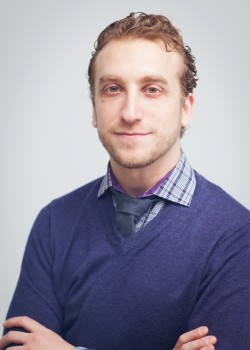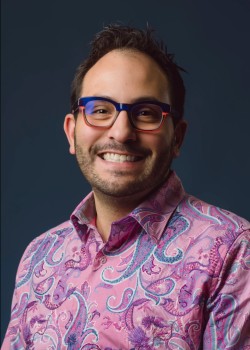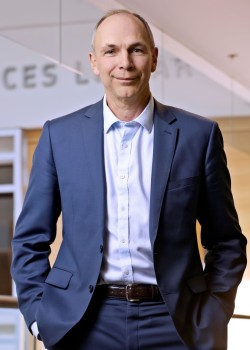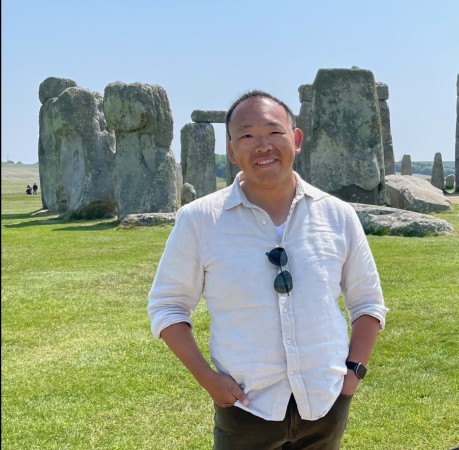
For Dr. Taylor Wong, medicine was never just about the science; it was about the detective work. “The ability to combine a variety of sources of information, to search, dig and think through the problem, to reason through possible causes and effects and to come to a most likely answer,” he says, was what drew him to the field.
That same curiosity led him to Geriatric Medicine, a specialty he describes as the perfect blend of challenge and meaning. “I came to Geriatric Medicine due to a combination of strong mentors, the opportunity to use my internal medicine knowledge and the chance to manage complexity in a way that supports the patient’s goals and wishes,” he says. “The patients themselves are often fascinating to talk to - they have lived experiences of things that I’d only ever read about in my schoolbooks.”
Born and trained in Alberta, Dr. Wong never planned to practice anywhere else. “Being from Alberta and having done the entirety of my training here, I was naturally attracted to remaining here,” he explains. “While our health care system has its challenges, it has generally been one where I can get my patients the care they need.”
He credits Alberta’s health systems for allowing physicians to provide better continuity of care. “Established systems such as central triage, single-operator laboratory systems and province-wide records facilitate care,” he says. “Listening to colleagues who have gone to other provinces makes me realise there are many advantages to how our system had been set up.”
Staying in Alberta also opened doors beyond clinical medicine. “Having trained here, I’ve been able to take on non-clinical career opportunities in education and administration that I likely would not have been able to have picked up as early had I gone elsewhere.”
Dr. Wong’s residency years were marked by upheaval and adaptation. “Residency, of course, was highly shaped by COVID and led to a very wholesale change in how we practice medicine,” he says. “We adapted on the fly, accepting that perhaps things were not as ideal as they could have been, but also finding opportunities to improve and find ways that did work better.”
Beyond the clinical lessons, residency taught him resilience, teamwork and balance. “It is incredibly difficult to do nothing but clinical work - it is physically and mentally exhausting,” he says. “But being able to take on other roles gives an outlet to employ my knowledge and skills as a physician in a different way.”
His time on PARA also shaped his understanding of how decisions affecting residents are made. “It gave me an appreciation for how decisions we as residents felt were straightforward, were perhaps not as easy to implement in reality,” he says. “It’s allowed me to accept many of the delays and administrative challenges I face in practice.”
Working with older adults has transformed how Dr. Wong views patient care. “As a geriatrician, we have always been focused on helping patients achieve their personal goals,” he says. “I’ve come to realise that the decisions patients make aren’t necessarily good or bad - they’re consistent with their values, and from their perspective are the right thing to do.”
That understanding has deepened his empathy and changed how he supports patients in their choices. “It’s made me much more comfortable in supporting them in making them,” he says.
He’s also carried forward a lesson from his residency years: that residents themselves need advocacy and preparation. “It seemed like administration often forgot about these nuances,” he recalls. “I work to ensure my colleagues and now my residents are maximally prepared to utilize everything available to them to optimise the management of their practices.”
Dr. Wong sees residents as essential to the health care system’s future. “They provide a significant amount of clinical labour and often do so under challenging conditions,” he says. “They form the future generation that will take on the role of representing the voices of physicians and surgeons in shaping our future health care system.”
For him, pride comes not from awards but from the people he’s mentored. “I am proud of the residents that have come after me, whom I have had the chance to teach, mentor and mould,” he says. “They have gone on to do great things, to become excellent physicians, and I am grateful that I have had the opportunity to have contributed a small part to their formative years.”
As PARA marks its 50th anniversary, Dr. Wong offers advice that reflects both humility and hard-won wisdom. “Residency is the most formative time in your career,” he says. “Take the time now to pick and choose from your preceptors’ examples and establish what you want that to look like.”
And his final piece of advice - simple, practical and perhaps the truest expression of a resident’s reality:
“Never stand when you can be sitting and never sit when you can be lying down. That has never let me down.”