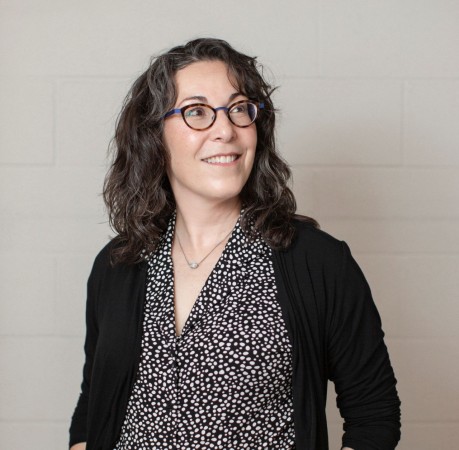
For Dr. Erica Dance, medicine has always been personal. Inspired by her father, an Infectious Diseases physician who dedicated his career to the care of patients with Cystic Fibrosis, she grew up surrounded by curiosity, compassion and the value of asking deeper questions. “My father taught me to always ask more questions, investigate a bit deeper and consider multiple perspectives,” she says. Supported by her family throughout her training, she set out to follow in his footsteps, though the specialty she would ultimately choose took her by surprise.
Emergency medicine wasn’t on her radar when she entered medical school. “I didn’t really like the sight of blood when I was younger,” she laughs. But after her first night on call in trauma surgery, she was hooked. The energy of the emergency department - the pace, the variety, the problem-solving - felt like home. Mentors encouraged her to pursue it and she found the shift work suited her life. What started as an unexpected path became a lifelong vocation.
Born and raised in Alberta, Dr. Dance stayed close to home for training. Matching to the emergency medicine program in Edmonton, one of the largest and most respected in the country at the time, was a turning point. “By the time I completed my training, Edmonton had been home for nine years. I was welcomed into the team at the Royal Alexandra Hospital, where I still work more than 20 years later and I never looked back.”
That sense of belonging and stability helped shape her career. Residency gave her more than medical knowledge - it taught her teamwork, adaptability and how to create supportive “work families” to lean on. She credits those years with clarifying what kind of physician she wanted to become.
Like many physicians, she identifies “the system” itself as one of her greatest challenges. “The structures responsible for delivering patient care often don’t support the frontline workers who provide that care,” she explains. Rather than stepping back, Dr. Dance stepped up. It was this frustration that drew her into medical leadership and advocacy, roles where she could influence change.
She also never lost sight of the human side of medicine. “The moments that shaped me most were watching mentors really see their patients. I could see their care and curiosity, their concern for doing the right thing and their ability to communicate openly and honestly with their patients,” she says. That lesson has guided her practice every shift since.
If there is one thread that defines her career, it’s her commitment to physician health. Soon after finishing residency, she began mentoring learners, which evolved into formal roles supporting resident wellness. In 2011, she became the inaugural Assistant Dean for Resident & Fellow Affairs in the University of Alberta’s newly created Office of Advocacy & Wellbeing. Over more than a decade in the role, she and her colleagues built safe, supportive programs that advocated for learners in meaningful ways.
Today, as co-director of the Alberta Medical Association’s Physician and Family Support Program, she continues that mission. “I feel so lucky to have had such meaningful, impactful and enjoyable work supporting resident physicians, physicians and medical students,” she says.
In a speech to medical graduates in 2023, Dr. Dance reflected on her own graduation from the University of Alberta 25 years earlier, in 1998. That year, PARA itself was marking a milestone. Known at the time as the Professional Association of Interns and Residents of Alberta, the organization changed its name to reflect a shift in training - the Internship Year had been phased out. “It’s striking how much has changed, and yet how familiar it all still feels,” she told graduates.
She also reminded them of three lessons that have guided her own path: the need for flexibility, the recognition that each journey is unique and the critical importance of surrounding yourself with safe and supportive community.
Her advice for today’s resident physicians is both practical and personal:
“Your family, your friends, and your patients all need you to be healthy, well, and well-supported so that you not only survive residency, but that you thrive during your training and beyond. Be flexible, be confident that no matter how it looks, your journey through medical training is your own, and keep those supports close.”
For Dr. Dance, emergency medicine offered variety, challenge and purpose. But it’s her dedication to mentorship, advocacy and wellness that has defined her impact on Alberta’s medical community. As PARA celebrates its 50th anniversary, her story underscores not just the evolution of training and practice, but the enduring importance of compassion, balance and care - for patients and for one another.