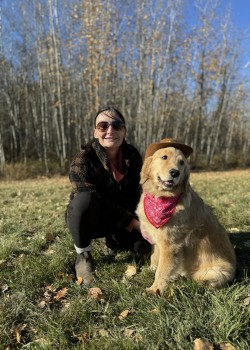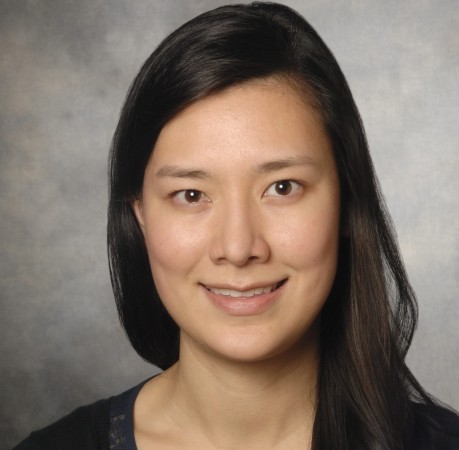
Dr. Adele Duimering didn’t always plan to stay in Alberta. Growing up on Vancouver Island, Edmonton wasn’t on her radar until a final-year elective brought her to the Cross Cancer Institute. “The Cross and University area felt like a small town within a big city; warm, welcoming and neighbourly,” she says. “I was fortunate to be offered a job upon graduation, initially filling in for a colleague in the Thyroid tumour group, which led to my joining that team alongside the Lung and Genitourinary tumour groups.”
Today, she’s built a fulfilling career as a Radiation Oncologist in a department she describes as large yet close-knit. “Our department is very collegial,” she says. “That’s afforded junior staff the opportunity to find their niche in leadership and academia.”
Dr. Duimering first discovered radiation oncology through a medical physics research project during her undergrad at the University of Victoria. “It’s a dynamic specialty that offers diverse and meaningful days; time with your patients, continually evolving radiotherapy planning skills and the opportunity to be part of a big team working towards important goals.”
Her path, however, wasn’t without challenges. During her final year of residency, she didn’t get into her dream fellowship program in New York City. “It was such a disappointment at the time,” she says. “In retrospect, things worked out just fine as a job materialized and I was spared being stuck away from home during what would become the COVID-19 pandemic.”
These days, she focuses on balancing a demanding medical career with family life. “Having young kids is chaos of the best kind,” she says. “I look forward to picking them up at the end of each day as much as I look forward to getting to the calm and quiet of work in the mornings. Each makes you appreciate the other more.”
Dr. Duimering credits her residency program for preparing her well for practice. “Our program was set up like a mini apprenticeship,” she explains. “You spend three months alongside each staff Radiation Oncologist and participate in most aspects of their work, so you graduate with a good sense of the realities of staff practice.”
Looking back, Dr. Duimering says the lessons that shaped her approach to patient care were often simple but lasting. “Early in my training a preceptor taught me to sit down, no matter how short the encounter with the patient,” she says. “No matter how rushed you are between seeing patients, when you’re interacting with a patient I find that taking a seat and giving someone your full attention conveys patience and respect, inviting meaningful discussion.” It’s a small gesture that’s stayed with her throughout her career; a quiet reminder that respect and empathy are often shown through presence, not words.
She’s also inspired by the residents she works with. “Without a doubt, their enthusiastic promotion of the specialty has shaped the incoming Radiation Oncology workforce,” she says. “They’re increasing female and minority representation, tackling waitlists and improving access to care for Albertans.”
Her pride is clear when she talks about her role as Residency Program Director. “Over the past four years, I’ve had the opportunity to work with our amazing residents to further build out an already strong program,” she says. “We’re now attracting more medical student applicants to the specialty each year than any other school.”
As she looks ahead, Dr. Duimering encourages residents to embrace every stage of training and trust the process of growth. “As daunting as it feels to be faced with the next stage in your training or career, in my experience it’s always better than the one that preceded it,” she says. “Clerkship is a breath of fresh air after textbook learning. Residency comes with new friends, the excitement of finally doing what you’ve signed up for and a paycheque. Staff life brings control over your schedule and practice interests. And from there are unlimited opportunities to craft a career and life for yourself that brings challenge and happiness. If you feel stuck in any one stage, just keep in mind that the next one may be drastically different - and better.”
It’s a perspective she carries into her work as both a physician and mentor: to keep moving forward, embrace change and trust that each phase of medicine brings its own rewards.